




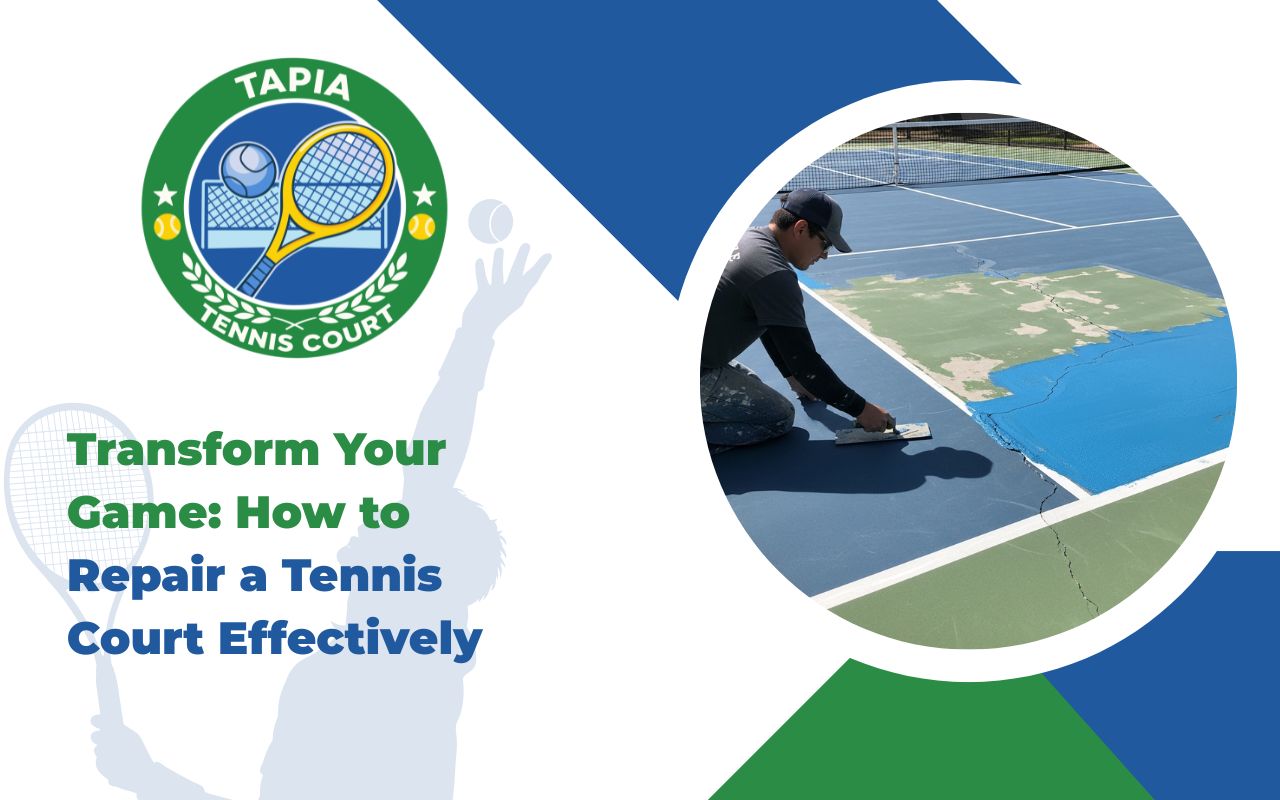
Transform Your Game: How to Repair a Tennis Court Effectively
When cracks spread or puddles stay on the surface, play becomes less safe and less enjoyable. Learning how to repair a tennis court helps protect ball bounce, player footing, and long-term property value.
At Tapia Tennis Court, we believe early care makes a real difference. Small signs like faded lines, rough spots, and low areas can grow fast, so owners need clear steps and the right solution.
Understanding What Damages a Court Surface
Weather, moisture, and daily use can wear down a tennis court over time. Rain can move into small cracks, while sun and heat can weaken coatings and fade color. As a result, the surface may look dull, feel rough, or become uneven in key playing areas.
These issues do not only change how the court looks. They also affect traction, comfort, and shot consistency, which is why surface damage should never be ignored for long.
Why Regular Inspections Help You Act Early
A careful tennis court inspection helps you catch small problems before they become large repairs. Tapia Tennis Court recommends checking the full surface often, especially after rain, heavy use, or seasonal weather changes.
Before deciding how to repair a tennis court, look at cracks, color loss, worn lines, and spots where water stays too long. Early action often saves time, lowers cost, and keeps the court ready for play.
Signs of Court Damage You Should Notice
Some problems are easy to miss at first, yet they can point to deeper wear below the surface. Watch for these common signs of court damage during routine checks:
Thin or widening cracks across the playing area
Faded lines that make calls harder to see
Low spots where puddles remain after rain
Peeling color coatings or rough patches
Soft areas that may suggest base trouble
When several of these signs appear together, it is wise to review the full condition of the court instead of treating only one spot.
When Minor Repairs Are the Right Move
Small repairs work well when damage is limited and the base is still stable. In many cases, this is the best starting point for owners who want to learn how to repair a tennis court without resurfacing the whole area.
Minor repair work often includes:
Cleaning the surface before any patching begins
Filling small cracks and smoothing the area
Leveling shallow low spots
Repainting faded game lines
Applying new coating in worn sections
Tapia Tennis Court often sees good results from early repairs when the damage is light and the rest of the court is still in fair shape.
When Is Resurfacing the Better Choice?
Resurfacing is usually the better option when damage affects large sections of the court or keeps coming back after patching. Repeated cracks, broad color loss, and several low spots often show that the surface needs more than a quick fix.
For some owners, how to repair a tennis court means looking beyond simple patch work. A full resurfacing job can improve texture, color, playability, and comfort while helping the court last longer.
What Shapes a Tennis Court Repair Estimate
A tennis court repair estimate depends on the size of the damaged area, the court age, the surface condition, and whether the base has shifted. Repair vs resurfacing decisions also affect the final scope of work.
When planning how to repair a tennis court, compare short-term savings with long-term value. Tapia Tennis Court encourages owners to review present damage, past repairs, and expected court use before choosing the next step.
Frequently Asked Questions
How do I know if a crack is serious?
A crack may be serious if it is wide, deep, or keeps returning after repair. That can suggest movement below the surface or a larger base problem.
Can faded court lines be fixed without resurfacing?
Yes, faded lines can often be repainted when the rest of the court is still in fair condition. Clear lines improve play and make the court look more complete.
How often should I inspect my court?
It is smart to inspect the court often and always after heavy rain or long periods of use. Regular checks help you spot signs of court damage early.
What basic care helps a repaired court last longer?
Simple care goes a long way. Keep the surface clean, remove leaves and dirt, watch drainage, and address new cracks before they spread.
Should I choose repair or resurfacing first?
Choose repair when the damage is limited to small areas. Choose resurfacing when wear is spread across much of the court or when repairs no longer last.
Keep Your Court Safer and Ready to Play
Good repair work protects your court, improves play, and helps avoid bigger costs later. We invite you to explore our tennis court services, review our repair solutions, or visit Tapia Tennis Court to learn more.
When you are ready for a closer review or want help with a tennis court repair estimate, contact Tapia Tennis Court. We are here to help you choose the right fix with confidence.