





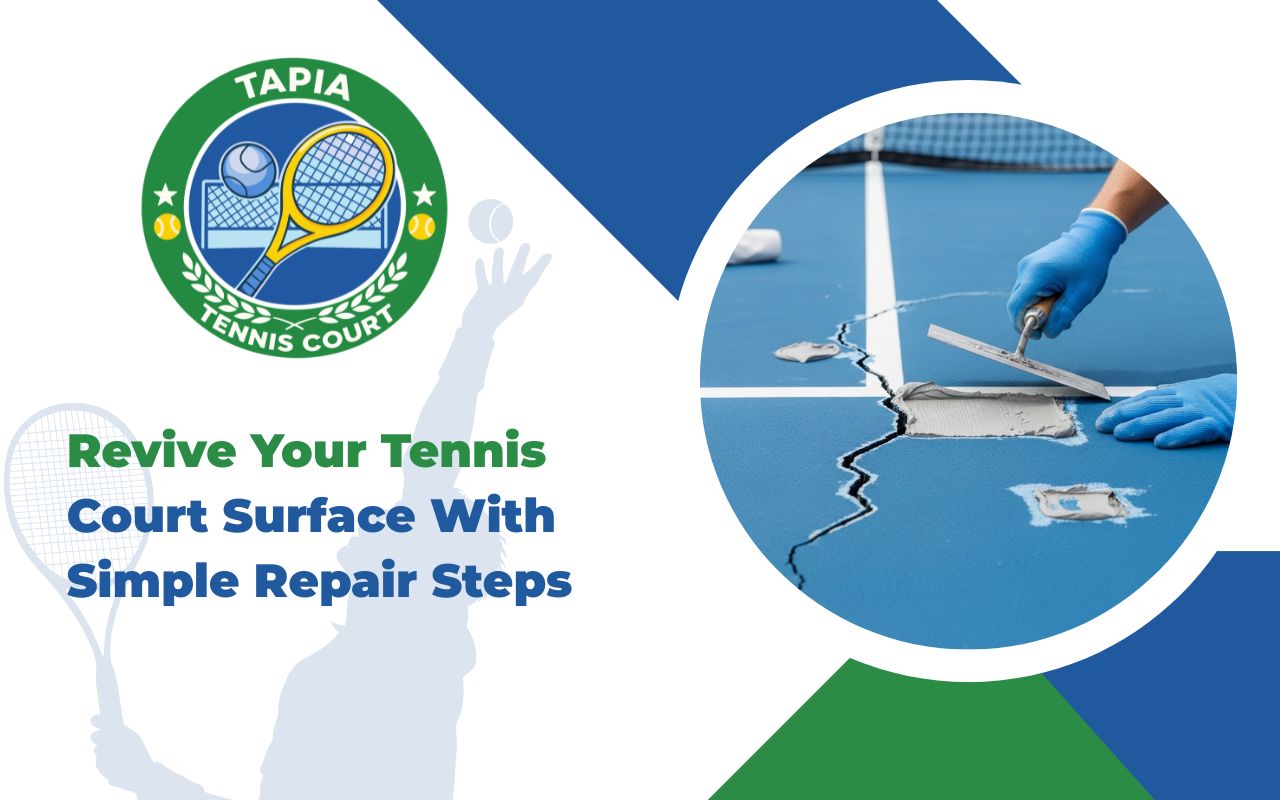
Revive Your Tennis Court Surface With Simple Repair Steps
Walking onto a court with faded color, cracks, stains, and slippery spots can take the focus away from the game. These issues can also create safety risks for players who need a steady footing and clear court lines.
At Tapia Tennis Court, we understand that a court holds many great memories. However, sun, rain, foot traffic, and time can wear it down. Learning how to repair a tennis court surface helps bring back a safe, clean, and enjoyable place to play.
Start With a Full Surface Inspection
Begin by walking the full court and looking closely at every area. Check for a worn tennis court surface, peeling layers, loose material, cracks, weak lines, and low spots where water may stay after rain.
Pay close attention to baselines, sidelines, and areas near the net. These spaces often wear faster because players stop, turn, and slide there during regular play.
Small or deep cracks across the surface
Faded court color and weak playing lines
Water pools after rain or cleaning
Slippery areas with poor grip
Loose debris, flaking material, or uneven spots
Understand Why Court Surfaces Wear Down
Tennis courts face sun, rain, movement, and changing ground conditions every day. Over time, these factors can weaken coatings, fade color, open cracks, and reduce the texture players need for safe movement.
Old materials, poor drainage, and heavy use can also lead to repair needs. Tapia Tennis Court looks at the cause of the damage first, so the right solution can protect the court longer.
Clean the Court Before Any Repair Work
Cleaning is an important first step in how to repair a tennis court surface because repair products need a clean area to bond well. Sweep leaves, dirt, gravel, and loose pieces from the surface before applying any filler or coating.
After sweeping, wash the court with mild soap and water. A low-pressure washer can help remove stains and buildup, but strong pressure may harm the surface. Let the court dry fully before moving forward.
Repair Cracks and Uneven Damaged Areas
Cracks should be cleaned before they are filled. Remove dirt and loose material, then use a flexible court sealant or acrylic crack filler made for sports surfaces. This helps the filler settle better and stay in place.
For wider cracks or deeper damage, Tapia Tennis Court may use patch material, leveling work, and a fresh topcoat. This process helps restore the surface and supports safer play.
Clean each crack before filling it
Use the right sealant or acrylic filler
Level patched areas with care
Allow repairs to cure fully
Apply a matching surface coat when needed
How Can Drainage Problems Affect Court Safety?
Standing water can make a court slick, stain the coating, and weaken repaired areas. It may also cause algae growth, which can increase the loss of traction on tennis court surfaces.
Check low spots after rain or after rinsing the court. Clear drains, clean edges, and review the slope so water can move away from the playing area. When water keeps returning, leveling or adding drainage may be needed.
Restore Color, Grip, and Playing Texture
After cracks and low spots are repaired, resurfacing may be the best next step. A quality acrylic resurfacer can improve grip, refresh faded court color, and create a more even bounce across the court.
Apply thin, even coats with a long-handled squeegee or roller. Once the resurfacer dries, a second coat can add strength and improve color depth. This surface restoration step helps the court look better and feel safer.
Use coatings made for tennis courts
Choose UV-resistant paint for longer color life
Add texture material to improve grip
Paint clean lines after the surface cures
Let all coatings dry before play resumes
Frequently Asked Questions
What are the first signs of court surface damage?
Small cracks, faded paint, pooling water, and slippery spots are common early signs. Tapia Tennis Court suggests acting early before these issues spread or create safety problems.
Can small cracks be repaired without full resurfacing?
Yes, many small cracks can be cleaned, filled, and coated without full resurfacing. This is often part of how to repair a tennis court surface before damage becomes more serious.
When is resurfacing better than patching?
Resurfacing is often better when cracks appear in many areas, the surface feels uneven, or the color and texture are badly worn. It can last longer than repeated small repairs.
How do I know if drainage is damaging my court?
If water stays on the court after rain, drainage may be part of the problem. Slow drying, algae, stains, and repeated low spots are common warning signs.
Why does my court feel slippery when dry?
A worn tennis court surface may lose the texture players need for safe movement. Fresh coatings with grip material can help improve traction and reduce slipping.
Keep Your Court Ready for Safer Play
Regular care helps protect the work already done. Sweep the court often, remove leaves before they stain, clean with mild products, and watch for cracks after weather changes.
Tapia Tennis Court believes early action makes a clear difference. Knowing how to repair a tennis court surface can help protect players, improve the court’s look, and extend its useful life.
For expert help, explore our professional tennis court services, learn about tennis court resurfacing in Napa CA, or review our tennis court resurfacing in Sonoma CA options. To plan your repair, visit our contact page.