



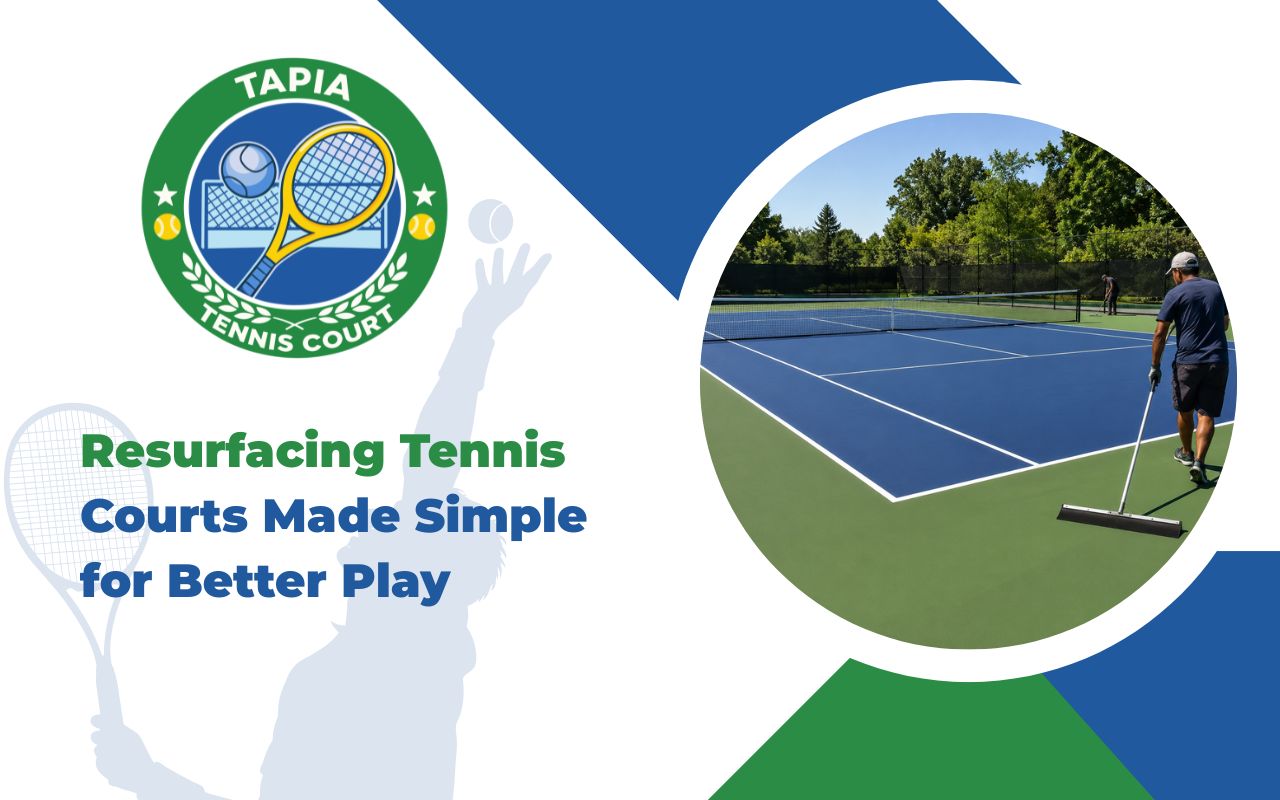
Resurfacing Tennis Courts Made Simple for Better Play
Resurfacing tennis courts is often the best way to bring a worn court back to safe, steady, and enjoyable play. Cracks, faded color, poor bounce, and standing water can make every match feel less fair and less comfortable.
At Tapia Tennis Court, we guide owners and facility managers through court checks, material choices, resurfacing scope, and resurfacing project planning. With the right plan, a tired surface can become a clean, reliable court for daily use.
Check Your Court Before Work Begins
Before any project starts, walk the full court and look for cracks, soft spots, loose surface areas, faded lines, and raised edges. These signs help define what needs repair before new coatings are added.
A simple ball bounce test can also show uneven areas. Then, check drainage after rain or washing. Standing water can weaken the surface, slow drying, and lead to more repairs over time.
Resurfacing tennis courts should always begin with a clear review of surface damage, use level, weather exposure, and drainage. This step helps reduce surprises and supports a better final result.
Choose Materials That Match Court Use
At Tapia Tennis Court, our team knows material choice affects comfort, safety, play speed, and long-term care. Acrylic coatings are common because they offer steady traction, clean color, and a smooth playing feel.
Cushion systems can make the court softer underfoot, while strong asphalt or concrete bases support heavy use. For busy sites, stronger systems may work better because they handle lessons, events, and daily play.
Acrylic coatings create a clean look and steady bounce.
Cushion layers can reduce stress on players’ joints.
Solid bases support frequent play and long-term use.
Good drainage helps the court dry faster after rain.
When choosing materials, think about climate, play level, maintenance, and surface goals. A home court may focus on comfort and color, while commercial tennis court resurfacing often needs stronger layers and careful scheduling.
How Do Home and Commercial Projects Differ?
Residential tennis court resurfacing usually involves lighter use, fewer site limits, and a more personal design goal. With Tapia Tennis Court, you get clear guidance on access, yard space, player movement, and surface needs so the court fits the property well.
Commercial projects often need more planning because clubs, schools, parks, and shared sites serve many players. These courts may also need fencing, lighting, seating, walkways, and clear access for service crews.
Home courts often focus on comfort, color, and simple care.
Commercial courts need stronger surfaces for daily use.
Multi-court sites need safe paths and shared drainage plans.
Busy venues often need work schedules that limit downtime.
For larger sites, the resurfacing scope should include traffic flow, player safety, access needs, and future maintenance. A stronger plan helps small surface issues stay under control.
Plan Each Step Before Coatings Begin
A strong process starts with cleaning. Crews remove dirt, loose paint, mold, and debris so the new surface can bond well. After that, cracks are filled, damaged areas are repaired, and the court is prepared for coating.
Next, a primer may be added before base coats and color coats. Each layer needs proper drying time. Weather, heat, humidity, and rain can affect the schedule, so timing should be part of resurfacing project planning.
Clear line markings finish the court and help players see each boundary. When each step is done in the right order, the court feels safer, looks cleaner, and supports better play.
Compare Professional Help and DIY Work
Some small home projects may seem simple enough for a careful DIY approach. However, resurfacing tennis courts takes clean preparation, steady coating work, correct tools, and the right weather window.
A professional team can spot deeper damage, explain repair options, and manage the resurfacing scope with better control. This matters even more for commercial tennis court resurfacing because downtime, safety, and long-term strength are major concerns.
When you work with Tapia Tennis Court, we help you understand whether your court needs minor surface work, deeper repair, or a full resurfacing plan. The right choice depends on court condition, use level, budget, and the quality you expect.
For more support, explore our tennis court services and learn how we approach court care from start to finish.
Budget, Timing, and Site Control
Cost depends on court size, surface damage, material choice, labor, prep work, and project scale. A home court may be easier to manage, while a commercial site may need larger crews, stronger materials, and more planning.
Weather also affects timing. Rain, strong heat, cold conditions, and high humidity can delay drying. For this reason, clear scheduling helps protect each new layer before the court is used again.
Surface cracks can increase prep work.
Heavy-use courts may need stronger coating systems.
Commercial sites may need safety and access planning.
Clear estimates help reduce stress and confusion.
Good resurfacing project planning should also include drainage, site access, permits when needed, and communication with players or members. For larger property work, our tennis court construction in Santa Rosa page shows how careful planning supports long-term court value.
Frequently Asked Questions
How often should a tennis court be resurfaced?
Most courts need resurfacing every few years, but timing depends on use, weather, drainage, and care. Heavy-use courts may need attention sooner than private backyard courts.
What is included in the resurfacing scope?
The scope may include cleaning, crack repair, surface prep, coating, color layers, line painting, drainage checks, and final review. The exact work depends on court condition.
Is commercial tennis court resurfacing more complex?
Yes. Commercial sites often need stronger materials, careful scheduling, safety planning, and more control because many players use the court each week.
Can resurfacing improve player safety?
Yes. New coatings, better texture, clear lines, repaired cracks, and improved drainage can reduce slip risks and create a more reliable playing surface.
How should I care for a resurfaced court?
Keep the court clean, remove debris, check for cracks, avoid harsh chemicals, and make sure water drains well. Simple care helps the surface last longer.
Keep Your Court Safe After Resurfacing
After the work is complete, regular care keeps the court ready for safe play. Sweep leaves, remove dirt, check drains, and look for early cracks before they grow.
Good safety upgrades can also make a big difference. Textured coatings improve grip, clear lines support better visibility, and proper drainage helps prevent slippery spots after rain.
At Tapia Tennis Court, we believe resurfacing tennis courts should improve more than appearance. The right plan can support safer movement, better bounce, easier upkeep, and a longer court life.
To learn more about our team and how we work with court owners, visit our about page and see how we approach each project with care.