





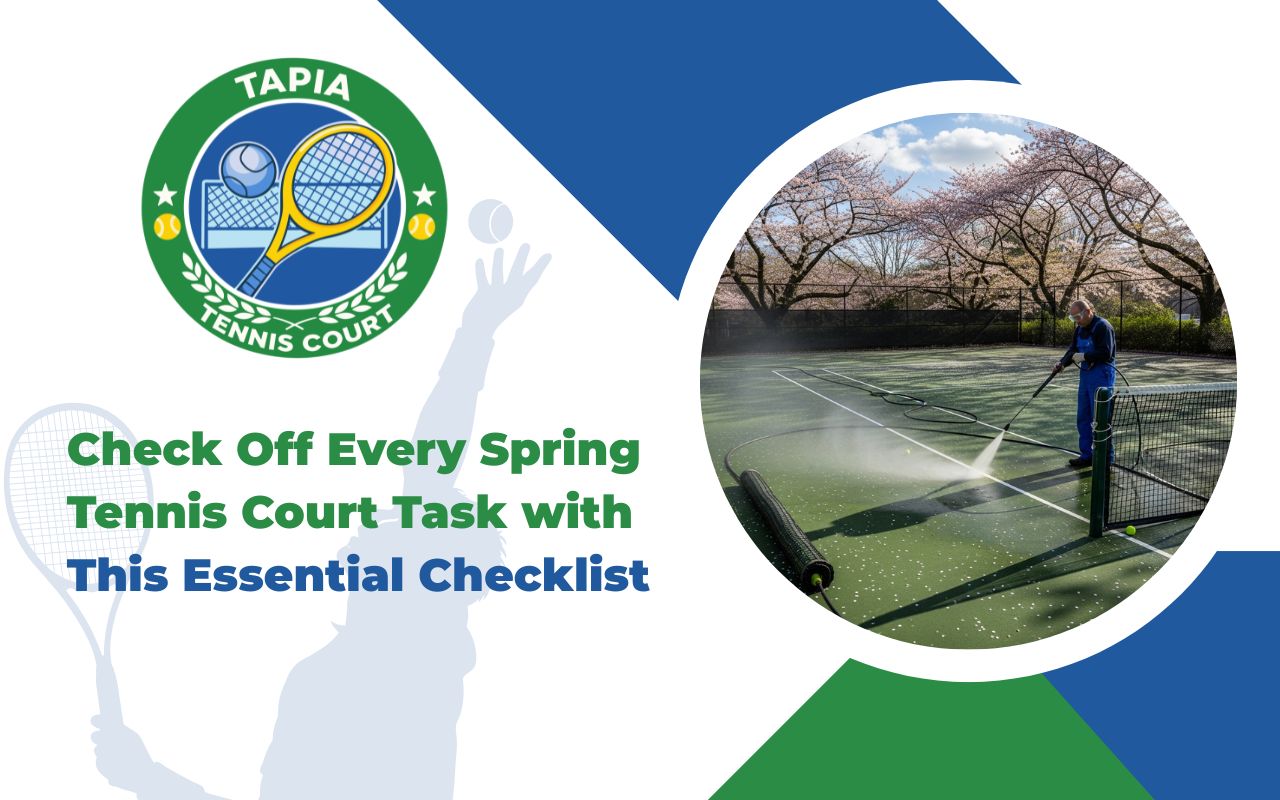
Check Off Every Spring Tennis Court Task with This Essential Checklist
Spring is the right time to get your court ready for busy play. At Tapia Tennis Court, we know a clean, safe, and smooth surface helps every match feel better from the first serve to the last point.
Our spring tennis court maintenance checklist helps you spot damage early, fix small issues, and protect your court for the months ahead. With the right steps, your surface can stay safer, look better, and last longer through the season.
Start With Winter Damage and Deep Cleaning
Begin with a full walk around the court. Look for cracks, loose debris, stains, and low spots where water may collect. This part of your seasonal tennis court inspection helps you see what winter left behind before play begins.
Remove leaves, twigs, and dirt with a broom or blower.
Check corners and edges for standing water or surface wear.
Wash mold or algae with mild soap and a soft brush.
Let the court dry fully before moving to the next step.
As part of your spring tennis court maintenance checklist, avoid pressure washing because it can wear down the coating. Once the surface is dry, it becomes much easier to see what needs repair.
Repair Cracks and Restore Surface Strength
After cleaning, inspect the surface for hairline cracks, chips, worn areas, and rough patches. Small flaws can turn into larger problems when they are ignored, especially during heavy spring and summer use.
At Tapia Tennis Court, we recommend using the right patching product for your court surface and allowing full cure time before play. When damage is more advanced, our tennis court repair services can help restore a more even and safer finish.
Check Fencing, Posts, and Net Hardware
Next, inspect everything around the playing area. A strong fence and a stable net system help keep the court safe and ready for regular use.
Tighten loose fence ties, bolts, and post hardware.
Look for rust, bent areas, or sagging fence sections.
Test net posts, center straps, hooks, and winch parts.
Replace damaged netting before active play begins.
These tennis court maintenance tips support better safety and smoother games. They also help prevent small equipment issues from turning into larger repair needs later in the season.
Improve Drainage and Refresh Court Markings
Water should move off the court quickly after rain or rinsing. If puddles stay too long, the surface can become slippery and wear down faster. Good drainage is a key part of preventive tennis court care and long-term surface protection.
Once repairs are complete, review the paint and line condition. Fresh coatings and clear lines complete your spring tennis court maintenance checklist and improve traction, visibility, and play quality. When a court needs a larger update, Tapia Tennis Court can guide you through tennis court resurfacing that fits your surface needs.
Inspect Lighting for Safer Early and Late Play
If your court is used in the morning or evening, check every fixture before the season starts. Replace burned-out bulbs, clean covers, and look for signs of moisture or worn wiring around each light.
Even lighting helps players track the ball and move with more confidence. This step supports outdoor court upkeep and helps avoid sudden lighting problems during practice, league matches, or weekend play.
What makes spring upkeep easier each year?
The easiest way to stay ahead of repairs is to use a simple routine. Regular checks help you catch small issues before they spread across the court surface or affect play.
Sweep debris often to reduce stains and surface wear.
Trim nearby trees and plants to limit moisture and buildup.
Review drainage, lines, and net tension every month.
Plan service early when repairs or resurfacing are needed.
For larger needs, our court services make seasonal planning easier. We also welcome you to contact Tapia Tennis Court when you want help building a smarter maintenance plan.
Frequently Asked Questions
How often should I inspect my court in spring?
We suggest a full review at the start of spring, followed by regular checks throughout the season. A good spring tennis court maintenance checklist makes it easier to stay organized and catch problems early.
What is the safest way to clean a tennis court?
Use a broom or blower for dry debris, then clean stains with mild soap, water, and a soft brush. Harsh tools or strong pressure can damage the surface coating.
When should cracks be repaired?
Cracks should be repaired as soon as they appear. Quick action supports preventive tennis court care and helps stop water from getting deeper into the surface.
Why does drainage matter so much?
Standing water can create slippery areas, surface damage, and mold growth. Good drainage supports safer play and helps extend the life of the court.
When is professional resurfacing the better choice?
If the court has widespread wear, faded color, rough texture, or many cracks, resurfacing may be the better option. Tapia Tennis Court can review the condition and help you choose the right next step.
Keep Your Court Ready for the Full Season
With the right care, your court can stay cleaner, safer, and more reliable from spring through peak play months. This spring tennis court maintenance checklist gives you a practical way to protect your investment and improve daily use.
At Tapia Tennis Court, we believe steady care leads to better performance and fewer costly surprises. Keep up with seasonal tennis court inspection, follow smart outdoor court upkeep habits, and reach out when your court needs expert attention.