



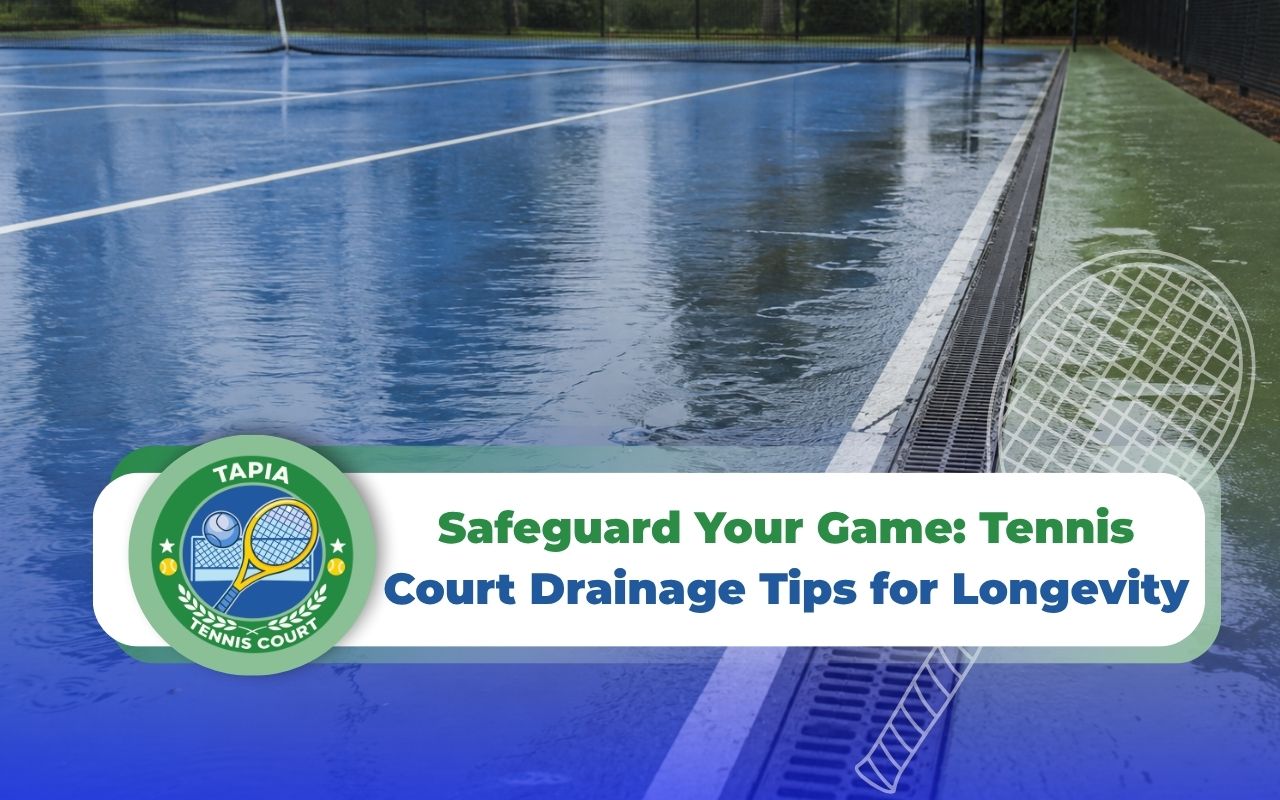
Safeguard Your Game: Tennis Court Drainage Tips for Longevity
Water can damage a court long before players notice major surface problems. At Tapia Tennis Court, we focus on smart tennis court drainage so your surface stays safer, stronger, and easier to use after rain. You can also explore our tennis court services for more support.
Good drainage is not only about moving water away. It is about protecting the base, reducing surface wear, and keeping the court ready for steady play. With the right plan, you can support better performance and longer court life.
Why Proper Court Drainage Protects Play
Effective tennis court drainage helps stop water from sitting on the surface or soaking into weak areas. When water stays too long, it can soften the base, create low spots, and lead to cracks. A dry, stable court also helps players move with more confidence.
Good drainage supports court surface longevity by reducing stress on the materials below the playing area. It also helps limit repair needs caused by repeated moisture damage. When water moves away quickly, the court can return to normal use sooner after rain.
What Happens When Water Stays on Courts?
Poor drainage can create problems that affect play, safety, and long-term surface health. Even small puddles may signal deeper issues below the court. These signs should not be ignored, especially when they appear after light or moderate rain.
Pooled water can weaken the surface and base layers.
Soft areas may create uneven ball bounce and unsafe footing.
Moisture can lead to stains, algae, and slippery spots.
Delayed drying can reduce court use after storms.
Small drainage issues can grow into larger repair needs.
Planning Drainage Around Site Conditions
Every court needs a plan based on its location, slope, soil, and water flow. Heavy clay soil may hold water longer, while sandy soil may drain faster but still need proper runoff control. Our team at Tapia Tennis Court looks at these details before choosing a drainage approach.
Site planning also includes checking where water goes after it leaves the surface. Runoff should move away from the court, nearby structures, and landscaped areas. If the court already has cracks or low spots, tennis court repair services may be part of the solution.
Practical Drainage Solutions for Courts
There are several drainage solutions for courts, and the right choice depends on the court design and water problem. Some courts need simple surface control. Others need deeper systems that help remove moisture from below the playing area.
Perimeter drains help move runoff away from court edges.
Slot drains collect surface water in key low areas.
Subsurface pipes help pull water away from the base.
Proper grading guides water toward safe drainage points.
Catch basins collect runoff before it reaches problem areas.
Surface and subsurface systems often work best together. This combination helps manage rain during storms and supports stronger moisture control on tennis courts over time. A balanced system can also help reduce future surface stress.
Moisture Control Habits After Heavy Rain
Good tennis court drainage still needs routine care. Leaves, dirt, and small debris can block drains and slow water movement. After storms, check drains, edges, and low areas so water can move away without delay.
Moisture control on tennis courts also depends on watching how the surface dries. If the same area stays wet longer than the rest of the court, it may need attention. For help with next steps, you can contact our court team for guidance.
Sustainable Options for Outdoor Court Runoff
Outdoor sports surface drainage can also support better water management around the property. Sustainable options help control runoff while reducing stress on nearby soil, landscaping, and storm systems. These methods can be useful when they fit the site conditions.
Vegetated swales can slow and guide runoff naturally.
Rain gardens may collect water near the court area.
Permeable walkways can reduce standing water around courts.
Stable edge grading helps direct water away safely.
Clean drain outlets help prevent backup during storms.
Sustainable drainage should still protect the court first. The goal is to move water away from the playing surface while guiding runoff to a safe place. This supports court surface longevity and helps keep the area easier to maintain.
Frequently Asked Questions
How do I know if my court has drainage problems?
Look for puddles, slow drying areas, algae, cracks, or soft spots after rain. These signs may show that water is not moving away correctly. You can review our court maintenance and repair services for possible support.
Can poor drainage shorten the life of a tennis court?
Yes. Water can weaken the surface and base layers when it stays too long. Over time, this can lead to cracks, uneven areas, and more frequent repairs.
Are surface drains enough for every court?
Not always. Some courts also need subsurface drainage when water collects below the playing area. The best plan depends on soil, slope, surface type, and the source of the water problem.
When should I ask for professional drainage help?
Ask for help when water keeps returning to the same spots or the court dries unevenly. With Tapia Tennis Court, you can discuss the issue through our contact page and plan the right next step.
Can drainage work be combined with court repair?
Yes. Drainage work is often planned with repairs when water has already caused cracks, low spots, or surface wear. Our tennis court repair team can help address damage and drainage concerns together.
Keep Your Court Ready Through Better Drainage
Reliable tennis court drainage protects play, improves drying time, and helps reduce avoidable damage. When you choose Tapia Tennis Court, we look at the full court area so the drainage plan supports real use, not just short-term water removal.
Our team at Tapia Tennis Court can help you plan better drainage, repair damaged areas, and protect the surface from future moisture problems. To take care of your court with a clear next step, request tennis court drainage support today.