



Solving Water Pooling on Tennis Courts With Simple Fixes
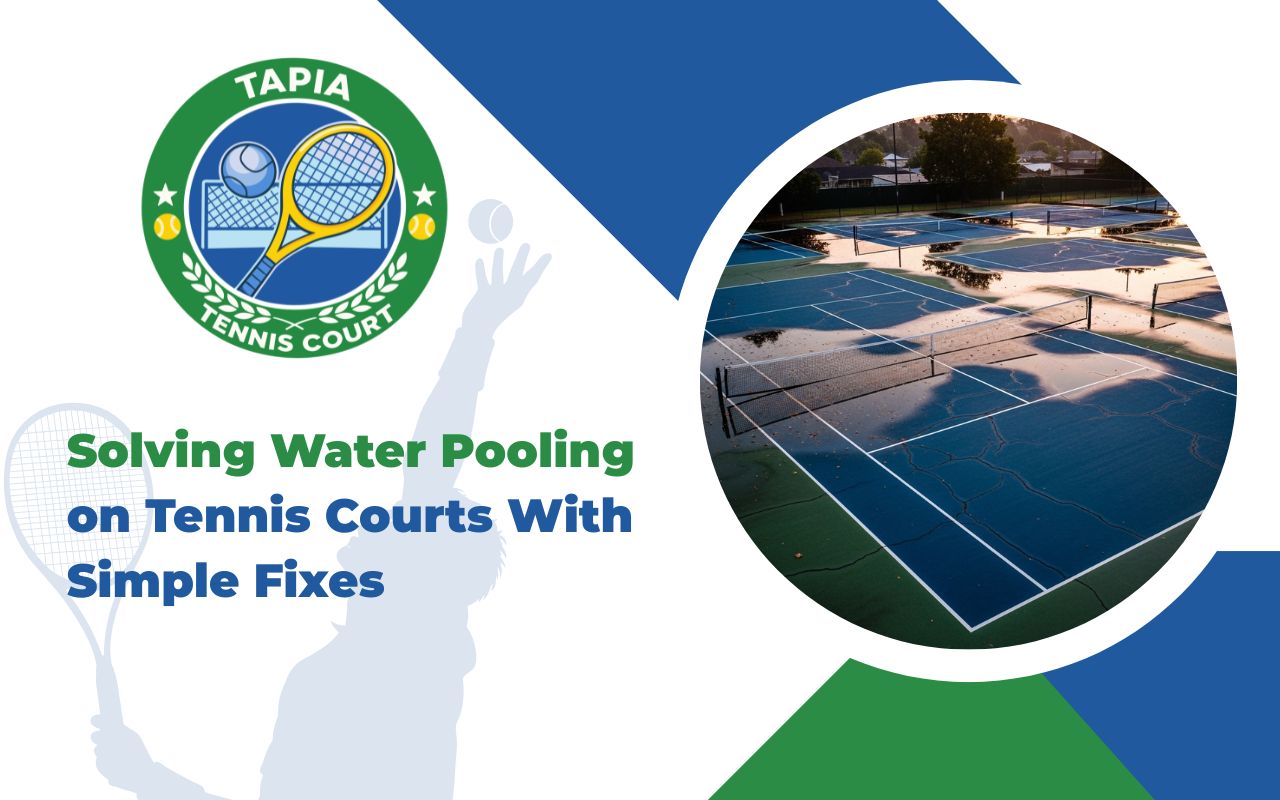
Water pooling on tennis courts can delay games, affect ball bounce, and make each match less safe. Puddles on court surface areas often point to low spots, poor slope, or blocked drains.
At Tapia Tennis Court, we help court owners keep play smooth, steady, and safer after rain. With the right repairs, drainage care, and surface work, your court can dry faster and feel better during every swing.
Why Does Water Stay on Your Tennis Court?
Water often stays on a court when the surface does not guide rain toward the right exit points. Even small dips can hold water long after the rest of the court is dry.
An uneven tennis court can also create slow spots where the ball skids or bounces in a strange way. Because of this, early checks help protect both the surface and the players.
Drainage Problems That Create Unsafe Play
Tennis court drainage issues can come from the court, the nearby ground, or clogged drain paths. These problems may seem small at first, but they can grow quickly after heavy rain.
Blocked drains that stop water from moving away
Wrong slope that sends water back onto the court
Low edges that trap runoff near the playing area
Soil movement that changes the court level over time
When these signs appear often, Tapia Tennis Court can review the surface and help plan the right next step for safer play.
Low Spots and Uneven Areas Need Care
Low spots on tennis court surfaces are one of the main reasons puddles stay in place. These areas may form from age, base movement, worn coatings, or past repairs that did not blend well.
Small dips can often be corrected during repair or resurfacing work. For deeper problem areas, our team may need to level the surface more carefully before adding a new finish.
Surface Repairs That Help Water Move
Good surface work can reduce water pooling on tennis courts and improve how the court feels underfoot. The goal is to guide rain away while keeping the playing area even and clean.
Fill small low areas with the right repair mix
Seal cracks before water reaches the base
Smooth rough spots that slow water flow
Refresh worn coatings for better surface control
For courts with visible wear, our tennis court repair service can help fix damage before it affects more of the surface.
Better Grading for Faster Court Drying
A court needs a gentle slope so water can move toward drains instead of staying in the playing area. When grading is wrong, even a clean court can still hold puddles after rain.
During resurfacing, we can check how water moves across the court and correct small level problems. Tapia Tennis Court focuses on practical fixes that support steady play and long-term court health.
Simple Maintenance Steps After Heavy Rain
Regular care helps reduce puddles on court surface areas and keeps drains clear. After storms, a few simple steps can make a real difference in drying time.
Remove leaves, dirt, and loose debris from court edges
Check drains and channels for clogs
Watch where water stays after the court dries
Schedule repairs when the same puddles return often
When the finish looks worn or uneven, our tennis court resurfacing service can help restore a cleaner and more even playing surface.
Frequently Asked Questions
What causes water pooling on tennis courts?
Water pooling on tennis courts is often caused by low spots, poor slope, clogged drains, or worn surface layers. A full surface check helps find the true cause.
Are puddles on a court surface dangerous?
Yes, puddles can make the court slippery and change how the ball bounces. Players may slip, stop suddenly, or lose balance during fast movement.
Can low spots on a tennis court be fixed?
Yes, many low spots can be filled and leveled during repair work. Larger areas may need more surface correction to help water move the right way.
How often should drainage be checked?
We suggest checking drains after heavy storms and during routine court care. Tapia Tennis Court can also inspect the surface when puddles return in the same places.
When should I request professional help?
You should request help when puddles remain for a long time, cracks spread, or the court feels uneven. Early service can prevent bigger repair needs.
Restore a Safer Court With Our Team
Water pooling on tennis courts does not have to keep interrupting your games. With the right repair, slope, drainage, and maintenance plan, your court can stay safer and more ready for play.
Tapia Tennis Court is ready to help you solve drainage and surface problems with clear, practical service. To start, visit our contact page and tell us what you are seeing on your court.