



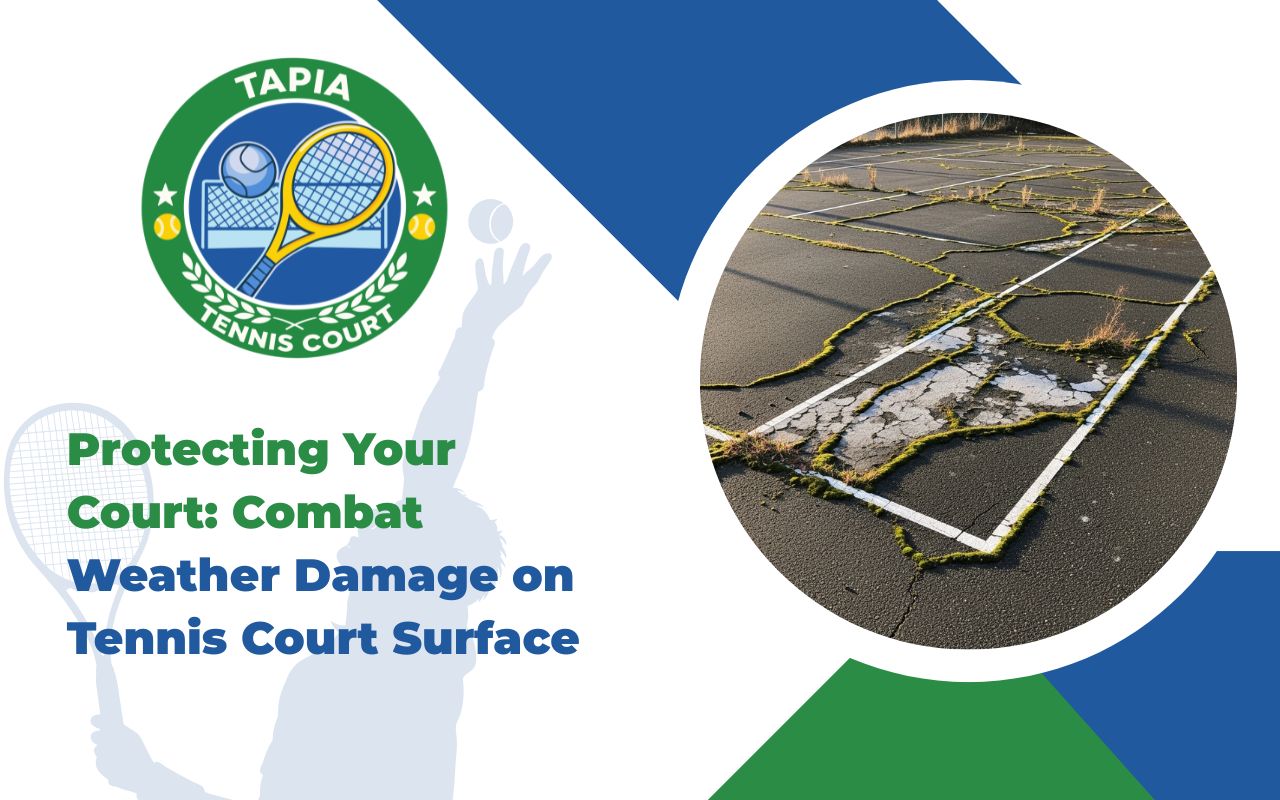
Protecting Your Court: Combat Weather Damage on Tennis Court Surface
A bright court looks inviting, but sun, rain, and time can slowly wear it down. Tapia Tennis Court knows how fast small surface issues can affect safety, play, and appearance.
When weather damage tennis court surface problems start to show, quick action matters. A faded look, slick spots, and weak coatings can grow into bigger repairs, so it helps to protect your court early and keep it ready for regular play.
How Outdoor Weather Slowly Wears Courts Down
Outdoor courts face daily stress from heat, sunlight, moisture, and debris. Over time, weather damage tennis court surface issues can weaken the top layer, reduce traction, and make line markings harder to see. As a result, players may notice changes in comfort, bounce, and grip during normal use.
Strong sunlight can dry out coatings, while heavy rain can sit on weak areas and speed up breakdown. At Tapia Tennis Court, we often see small signs appear long before major damage, which is why early care is one of the best ways to protect your investment.
Signs Your Court Needs Attention Soon
It helps to inspect the full court often, especially after storms or long dry periods. In many cases, visible wear tells you where outdoor court wear is getting worse and where action should come first.
Cracks that spread across the playing area or along edges
Low spots where water stays after rain
A faded tennis court surface with dull color or weak line visibility
Slick areas caused by moisture, dirt, or algae buildup
These signs may seem minor at first, yet they can quickly grow into larger repairs. Keeping simple notes and photos also makes it easier to track changes from one season to the next.
Protective Coatings That Help Surface Life
The right coating can slow wear, improve grip, and refresh the look of the court. This matters even more when UV damage tennis court conditions are common, because long sun exposure can fade color and weaken the surface layer.
Acrylic coatings help improve traction and color retention
Sealants help block moisture from getting into the surface
Tinted systems can restore a faded tennis court surface more evenly
Choosing the right system depends on the court material, local weather, and current condition. We always recommend matching the product to the court instead of using a one-size-fits-all approach.
Drainage Steps That Prevent Surface Trouble
Water that stays on a court can do serious harm over time. Rain damage tennis court areas often begin where the slope is uneven or where drains are blocked by leaves and dirt. Because of this, drainage should be checked as part of normal care, not only after a storm.
A slight slope helps water move away from the playing area. Edge drains and clean grates also reduce the chance of standing water, soft spots, and surface separation. When drainage works well, the court dries faster and stays more consistent for play.
Routine Habits That Keep Courts Looking Better
Simple maintenance done on a regular schedule can make a big difference. It also lowers the chance that weather damage tennis court surface issues will turn into costly resurfacing work.
Sweep or blow off leaves and debris every week
Check for puddles, cracks, and worn color each month
Clean slick spots quickly before mold or algae spreads
Plan seasonal inspections before heavy rain or high heat
Courts that get steady care usually stay safer, cleaner, and more attractive. Tapia Tennis Court also encourages prompt repairs when you notice early warning signs instead of waiting for damage to spread.
When Should You Repair Small Court Cracks?
Small cracks should be repaired as soon as you notice them. Once water gets inside, the surface can weaken faster, especially during repeated wet and dry cycles. That is why quick patching often prevents much larger repairs later.
Clean the damaged area well, apply the right filler, and let it cure fully before coating the spot. If the repair blends well with the court, you protect both appearance and performance at the same time.
Frequently Asked Questions
What causes the most damage to an outdoor tennis court?
Sun, standing water, and missed maintenance are the most common causes. Together, they can wear down coatings, fade color, and weaken the surface.
How do I know if rain is hurting my court?
Look for puddles that stay too long, slick spots, algae growth, or areas where the surface begins to lift. These are common signs of rain damage tennis court conditions.
Can sunlight really fade the court that much?
Yes. Long sun exposure can lead to UV damage tennis court surfaces often show through color loss, dry coatings, and a rougher finish.
How often should a court be inspected?
A quick check every month is helpful, and it is smart to inspect again after strong storms or very hot periods. Regular checks help catch problems early.
When is resurfacing better than spot repair?
If cracks, fading, and wear appear in several areas, resurfacing may give you a more even and longer-lasting result. Tapia Tennis Court can help determine when that step makes the most sense.
Keep Your Court Ready In Every Season
Protecting a court takes more than one repair. Good drainage, the right coatings, and steady upkeep all help reduce weather damage tennis court surface problems before they grow. With the right plan, courts stay safer, look better, and last longer.
At Tapia Tennis Court, we believe smart maintenance protects both play quality and long-term value. When your court starts to show wear, Tapia Tennis Court is ready to help you choose the next step with confidence.